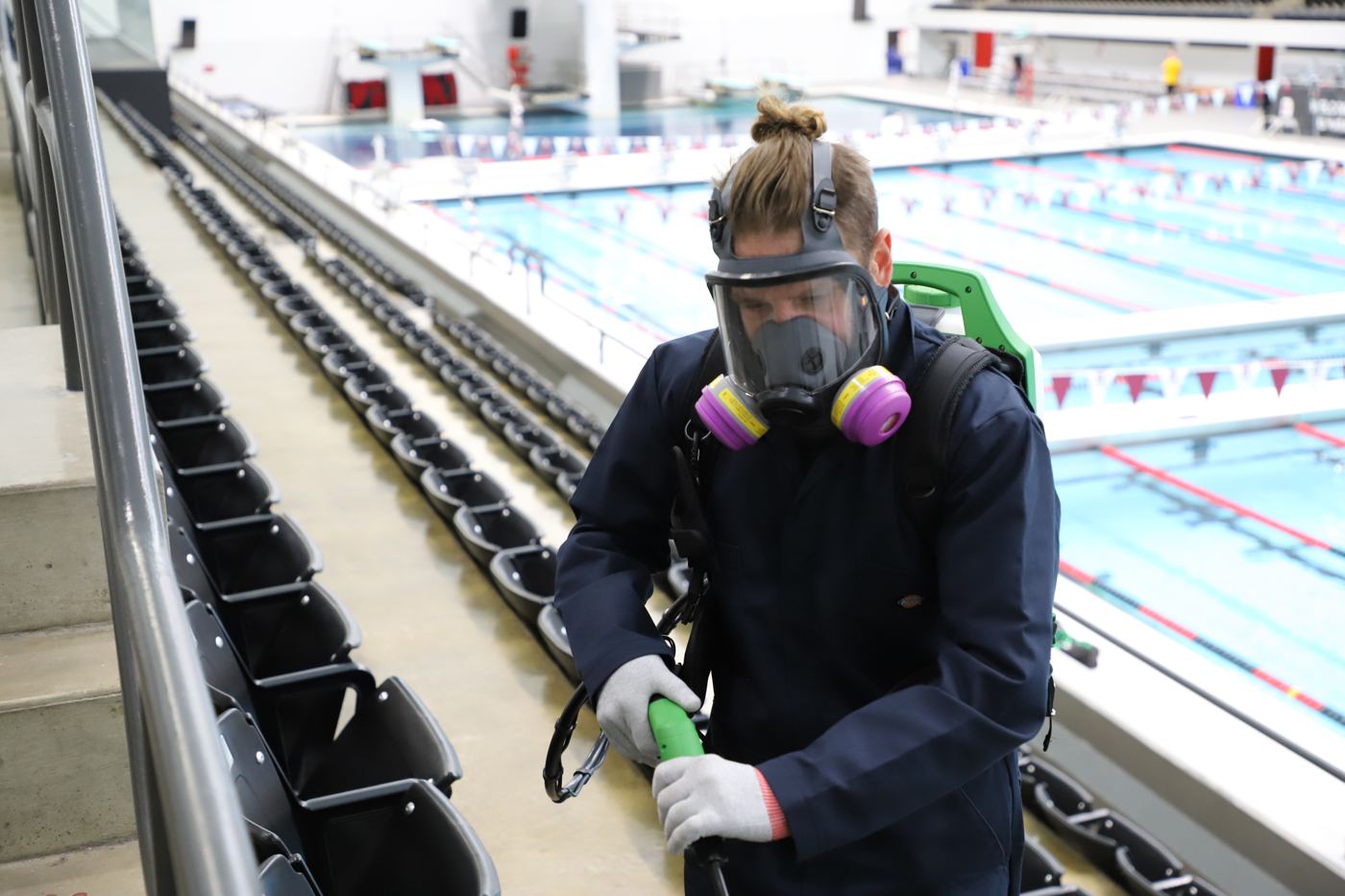
How It Works
Three things to understand: the chemistry, the system it powers, and why we measure results in the field.
01 — The Science
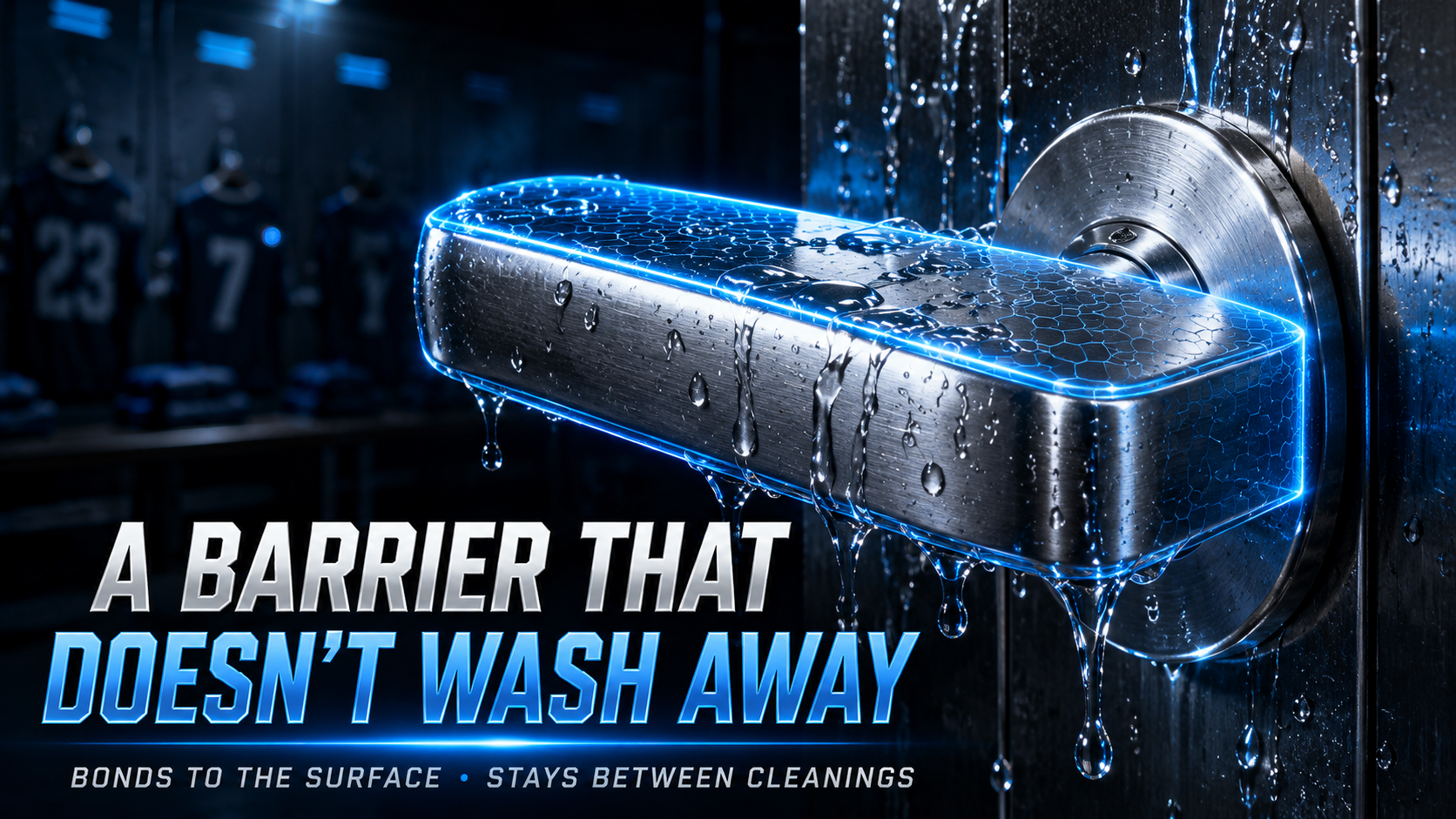
Conventional quaternary ammonium disinfectants ("quats") work while wet, then wash away with the next cleaning. They leave nothing behind.
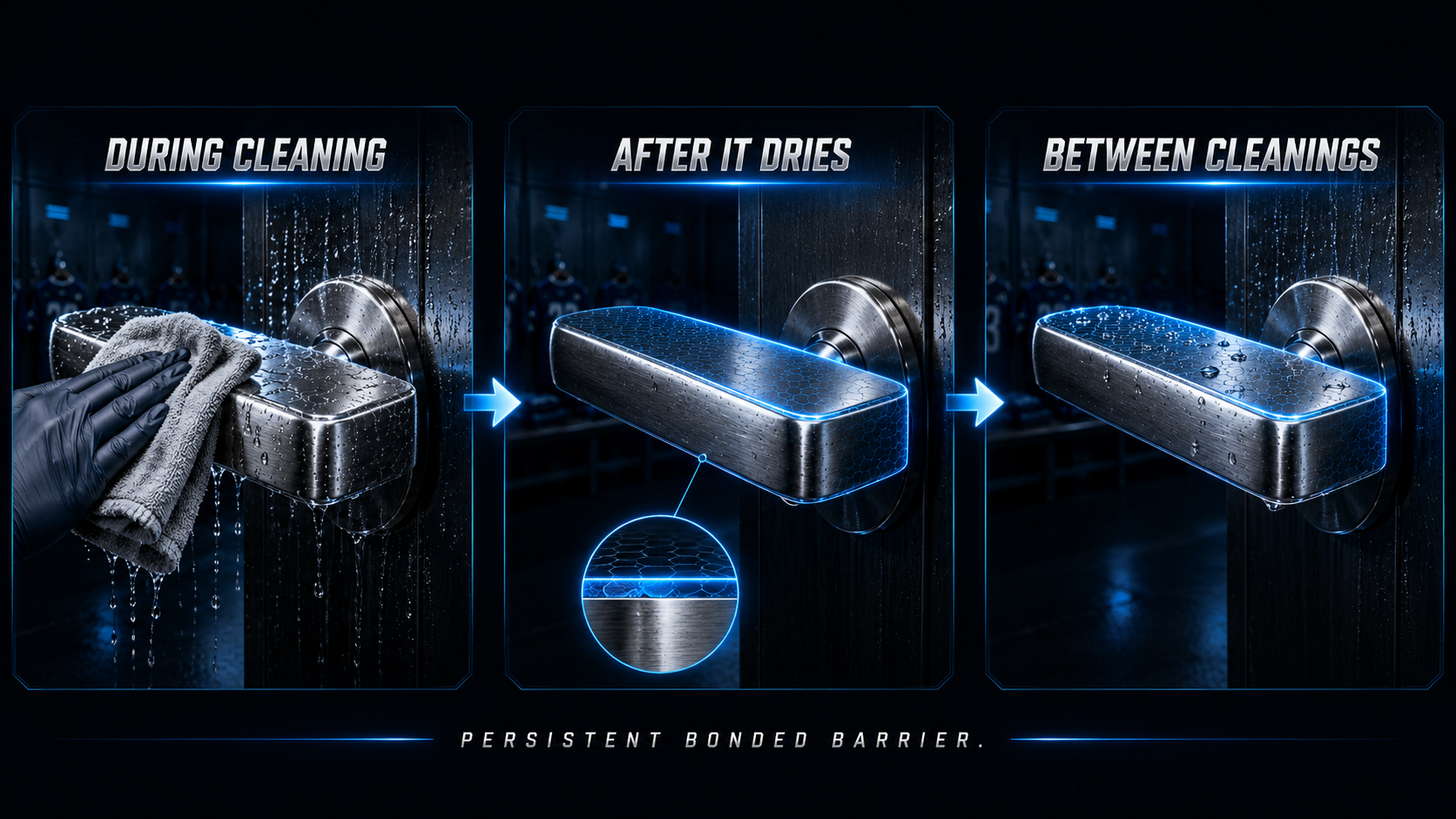
Shield3's surface chemistry is a silane quat that covalently bonds to the surface. Once bonded, the layer does not leach off — it forms a persistent antimicrobial barrier that remains active between routine cleanings.
This is why we describe Shield3 as a barrier that complements your cleaning, not a replacement for it. You keep cleaning as you always have; the bonded barrier works in the gap between those cleanings.
Layer 1 surface chemistry (System 3 SDP) is manufactured with 2V Industries and private-labeled for Shield3 Athletics.
02 — The System
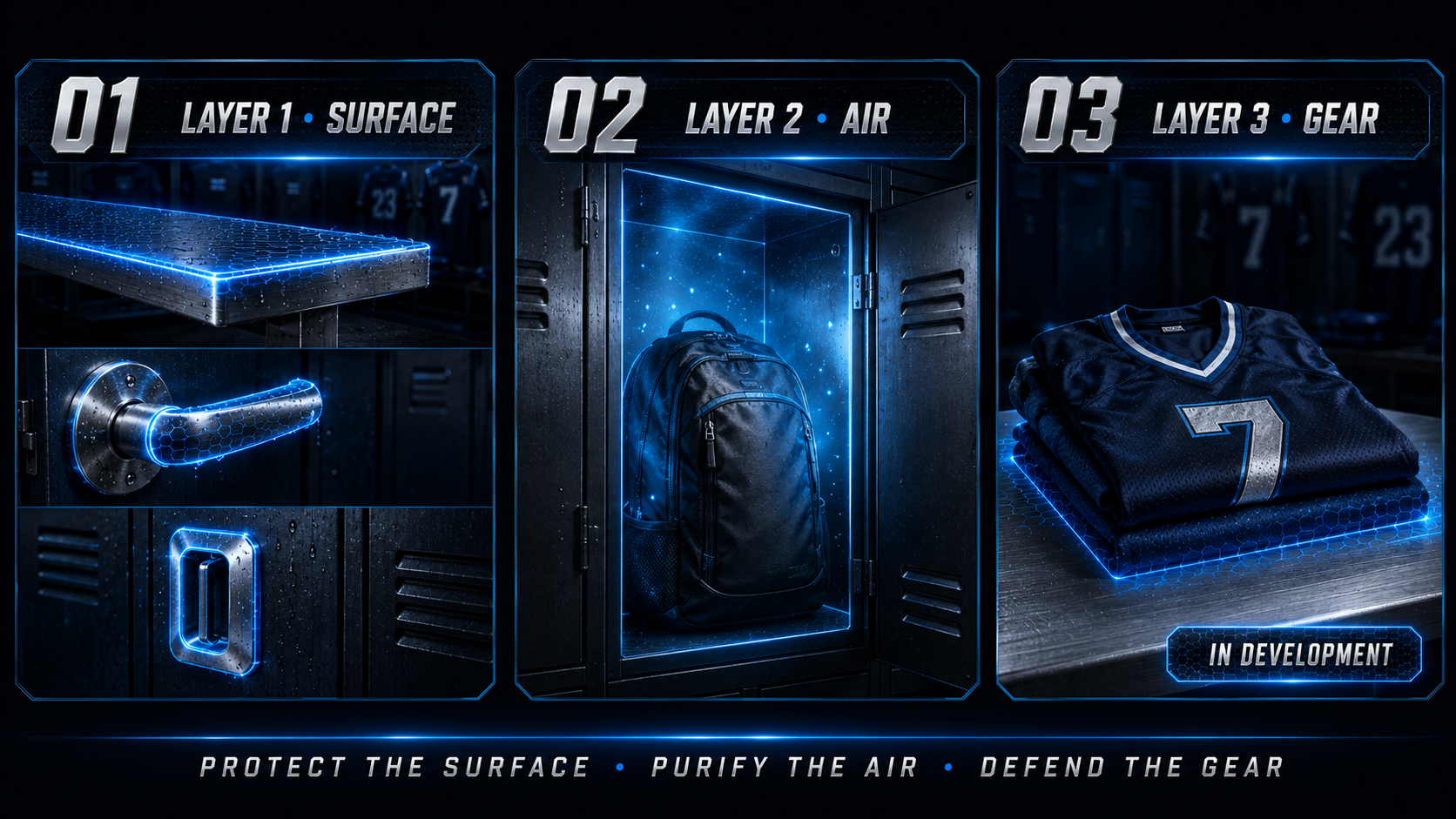
Layer 1 · Surface
A silane quat that covalently bonds to surfaces, forming a persistent, non-leaching barrier that stays active between routine cleanings. Manufactured with 2V Industries; private-labeled for Shield3 Athletics.
Layer 2 · Air
Chlorine dioxide (ClO₂) sachets and tablets for continuous atmospheric treatment in enclosed storage. Private-labeled via Beckart Environmental.
Layer 3 · Gear
Silane quat delivered through a dissolvable laundry sheet, extending barrier protection into the wash cycle. In active development — not yet a shipping product.
Protect the Surface · Purify the Air · Defend the Gear
03 — Why We Test
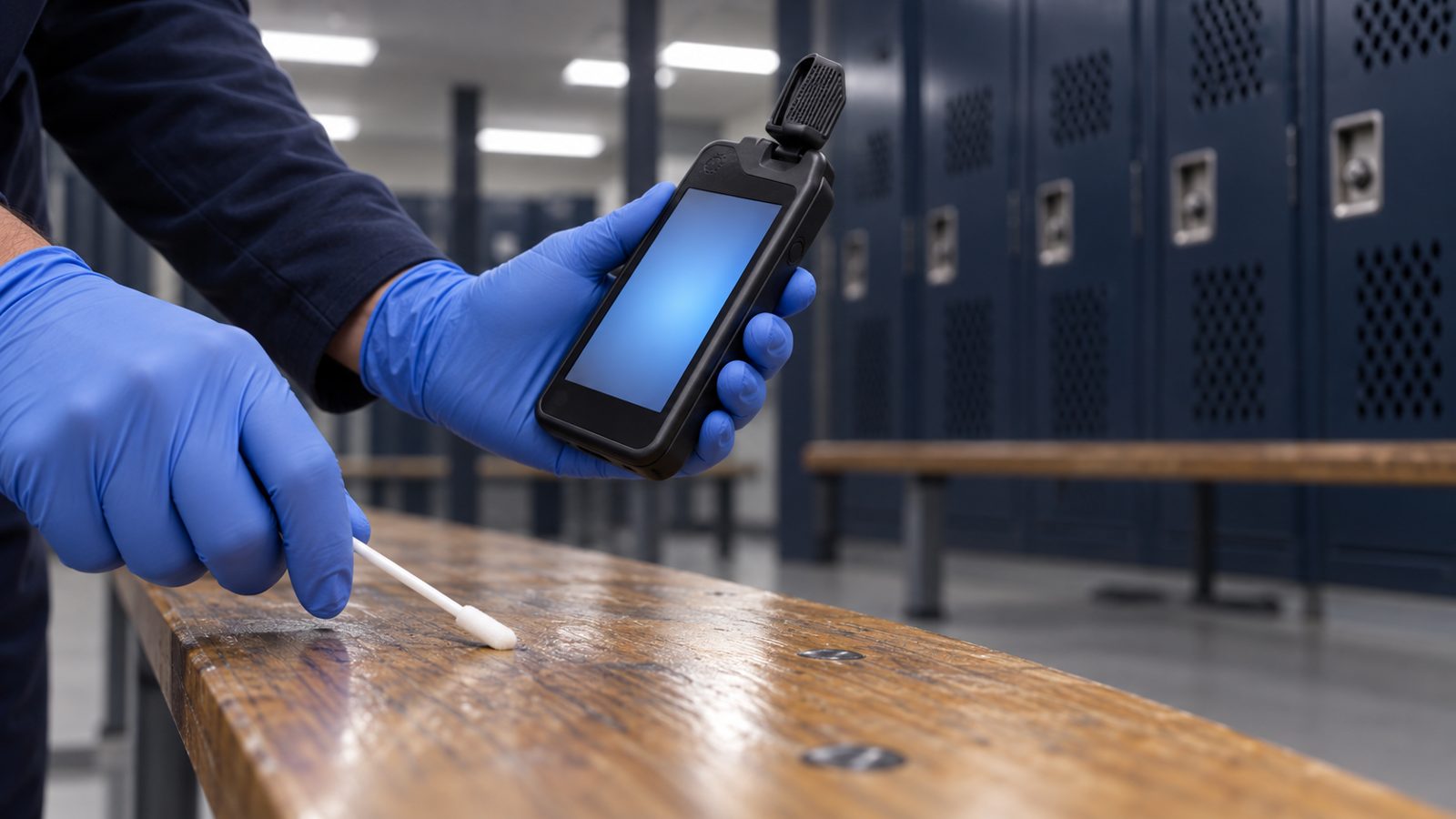
ATP testing measures bioburden — the amount of biological residue on a surface — reported in relative light units (RLU). It's a fast, standard way to gauge how clean a surface is.
In the field, we take an RLU reading before treatment and again after, on the same marked zones, to document the change in surface bioburden under real conditions.
We keep this field evidence separate from our laboratory chemistry validation, and we report ATP results as bioburden measurements — not as pathogen-specific kill claims.